HYPD AutoDM: Automating Engagement for Content Creators
HYPD AutoDM: Automating Engagement for Content Creators
Opportunity
Opportunity
The opportunity for this project came directly from our founder, who saw a critical gap in the market. They observed that competitors like Manychat and Wishlink were offering automated DM features, and they also learned about the new Meta APIs that made a similar feature technically feasible for us. The vision was to take this market trend and build a superior, fully integrated solution for Hypd's users.
My role was to take this initial vision and transform it into a tangible product that would directly solve our users' problems and create significant business value.
The opportunity for this project came directly from our founder, who saw a critical gap in the market. They observed that competitors like Manychat and Wishlink were offering automated DM features, and they also learned about the new Meta APIs that made a similar feature technically feasible for us. The vision was to take this market trend and build a superior, fully integrated solution for Hypd's users.
My role was to take this initial vision and transform it into a tangible product that would directly solve our users' problems and create significant business value.
My Process
My Process
My process was fast-paced and collaborative, perfectly suited for the startup environment. Instead of a rigid, textbook approach, I focused on a lean, efficient cycle of discovery, design, and validation.
Stakeholder Interviews & Insights: I had direct, frank discussions with the founders, PMs, and team leads from our Brands and Creator teams. The goal was to understand their unique perspectives and pain points. For example, the Brands team needed a way to qualify leads automatically, while the Creator team wanted a tool to manage a high volume of fan DMs without constant manual effort.
Competitive & Feature Analysis: I did a deep dive into what our competitors were doing. I didn't just look at their features, but also how they were designed. I analyzed their user flows and identified their strengths and, more importantly, their weaknesses. This research helped us find opportunities to create a more intuitive experience.
My process was fast-paced and collaborative, perfectly suited for the startup environment. Instead of a rigid, textbook approach, I focused on a lean, efficient cycle of discovery, design, and validation.
Stakeholder Interviews & Insights: I had direct, frank discussions with the founders, PMs, and team leads from our Brands and Creator teams. The goal was to understand their unique perspectives and pain points. For example, the Brands team needed a way to qualify leads automatically, while the Creator team wanted a tool to manage a high volume of fan DMs without constant manual effort.
Competitive & Feature Analysis: I did a deep dive into what our competitors were doing. I didn't just look at their features, but also how they were designed. I analyzed their user flows and identified their strengths and, more importantly, their weaknesses. This research helped us find opportunities to create a more intuitive experience.
Market Research
Market Research

Design & Iteration
Design & Iteration
I believe that good design is a conversation, not a monologue. My design process was all about getting rapid feedback and iterating quickly.
User Flow & Low-Fidelity Design: I started by mapping out the core user journey, focusing on a simple and clear flow. This ensured the logic was sound before I moved to visual design.
Prototyping & Feedback Sessions: I created an interactive prototype of the feature. Instead of a formal testing lab, I shared this prototype directly with my key stakeholders. We sat together and they gave me live, in-the-moment feedback. This allowed me to make quick changes and move forward with confidence.
I believe that good design is a conversation, not a monologue. My design process was all about getting rapid feedback and iterating quickly.
User Flow & Low-Fidelity Design: I started by mapping out the core user journey, focusing on a simple and clear flow. This ensured the logic was sound before I moved to visual design.
Prototyping & Feedback Sessions: I created an interactive prototype of the feature. Instead of a formal testing lab, I shared this prototype directly with my key stakeholders. We sat together and they gave me live, in-the-moment feedback. This allowed me to make quick changes and move forward with confidence.
Final Designs
Final Designs
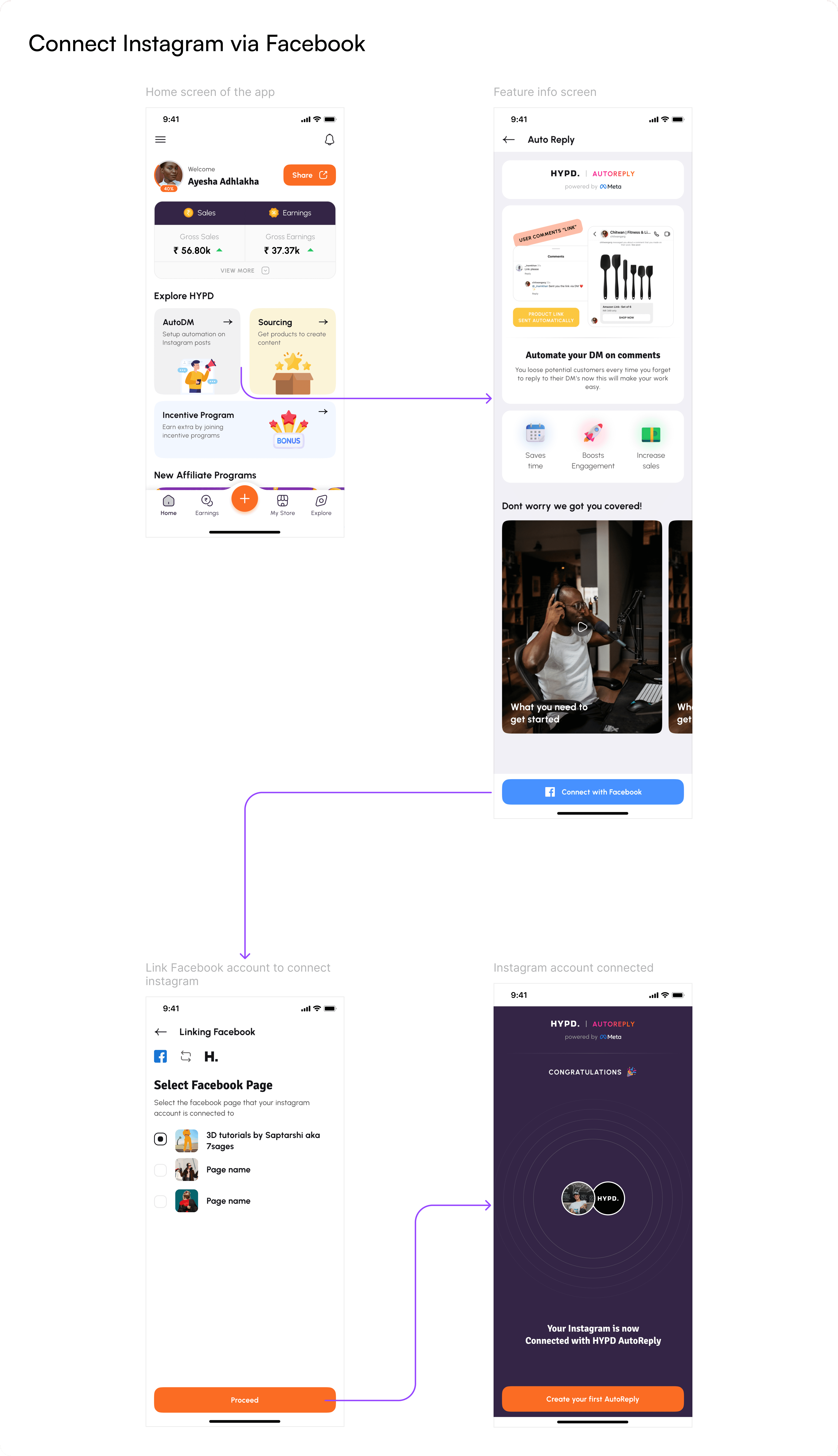

Impact
Impact
The goal of this feature was to help creators sell more and save time. We achieved this in a few ways:
Time Saved: Creators no longer had to spend hours sending links. The feature handled all of the repetitive work for them.
More Sales: By sending the product link instantly, we increased the chances of a follower actually buying the product. The faster they get the link, the more likely they are to click it.
The goal of this feature was to help creators sell more and save time. We achieved this in a few ways:
Time Saved: Creators no longer had to spend hours sending links. The feature handled all of the repetitive work for them.
More Sales: By sending the product link instantly, we increased the chances of a follower actually buying the product. The faster they get the link, the more likely they are to click it.
Let's Collaborate & Build ⚒️
Let's Collaborate & Build ⚒️
Designed & developed by Hemanshu Patel